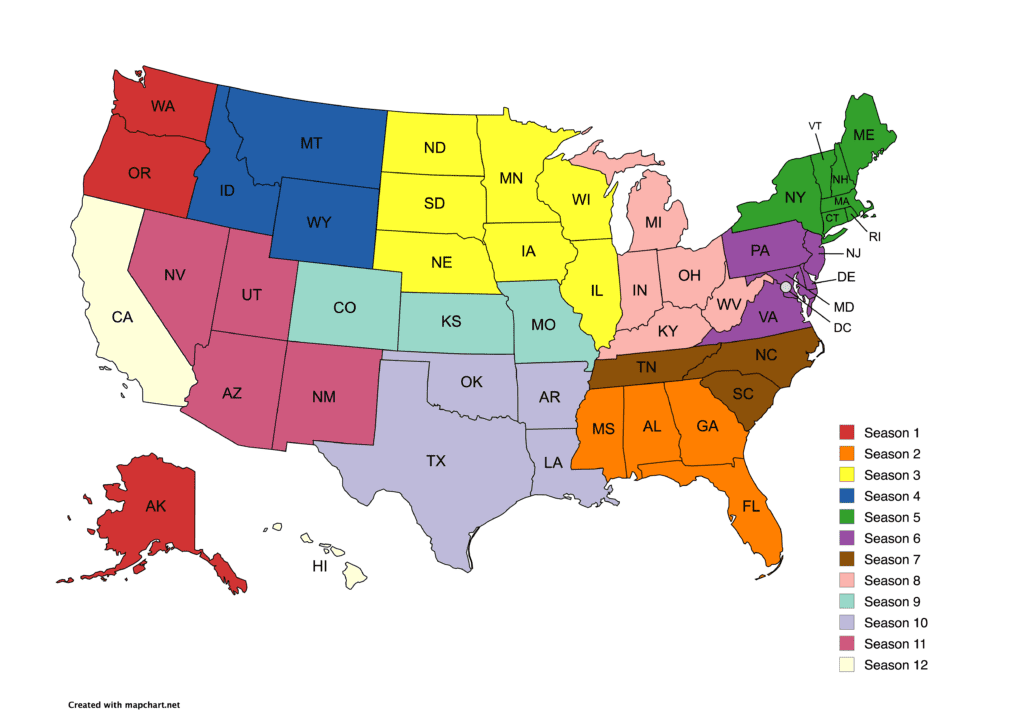
One hundred episodes. Thirty-two states down. Eighteen to go.
I want to be upfront about the production situation here, because it became part of the story. I sat down thinking I was going to set up one camera, talk to it for a little while, and call it a milestone episode. What I ended up with was a three-camera shoot in my editing suite, a whiteboard with bullet points, an air conditioner that turned on at the wrong moment, a tangent about microphone noise cancellation I definitely didn’t plan on, and footage from South Carolina that I kept ducking back into between studio segments. It was a production in the loosest possible sense of the word. Frank, I know what you’re thinking.
But that’s also, I think, the most honest version of where I am at episode 100: someone who’s figuring it out as he goes, getting better at it, not pretending otherwise.
Why I Did This
I’ve touched on it in individual episodes, but I wanted to say it plainly here, at the hundred mark, for anyone who’s new and for anyone who’s been along for the whole ride.
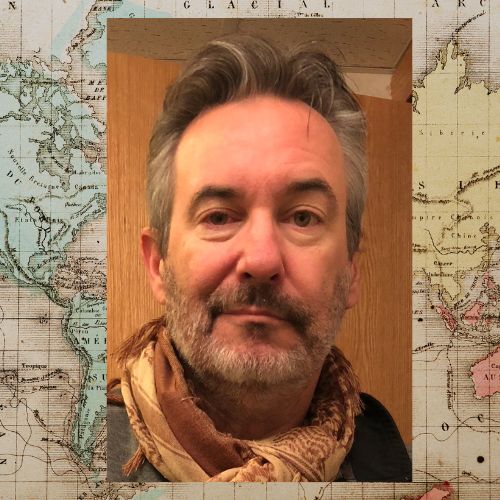
I turned 60 two years ago, and that number hit differently than I expected. Part of it is just the math — you become more aware of runway when the decades start stacking up. But a bigger part of it was my dad. He died at 60. The same age I turned when I started this. That’s not a coincidence so much as a reason. I’ve thought about him a lot this year. I think about what he might have done with the years he didn’t get. Every morning when I catch myself in the mirror with the hair going in every direction, I think: there he is.
I also wanted to acknowledge something I’ve mentioned in passing but never quite said directly: the alcohol-free year was not incidental to finishing this. It was essential. I started with a dry January — felt so different by February that I just kept going. The math eventually got too obvious to ignore. Three glasses of wine and the next day was gone. Lethargic, foggy, half-speed. The alcohol-free version of me produced a hundred episodes of a project that didn’t exist a year ago. I’m staying on that path.
What I didn’t plan on — what I genuinely didn’t see coming when I started — was how much this year would change the way I think about what I’m doing and where I’m going. I thought I was going to produce a collection of tactical travel content. What to see, what it costs, how to plan it. I ended up creating almost none of that. What I hope I made instead was a collection of small stories that add up to something — something about slowing down, staying curious, talking to strangers, and paying attention to where the light is.
The Blog and the Claude Thing
I want to talk about this because it came up in the episode and I think it’s worth being honest about.
The blog that accompanies this series — one post per episode — is something I’ve been building with the help of AI. Specifically, Claude. I drop the transcript from each video in, I’ve spent time training it to understand my voice and what I’m actually going for, and it helps me produce a written version of each episode that I can stand behind. Writing has never come easily to me. Finding a tool that lets me communicate in writing the way I try to communicate on camera — that’s been one of the genuinely useful discoveries of this year.
I read part of one of the posts on camera in this episode. The paragraph about my dad. It said: he passed away at 60, the same age I turned this year, which is the age I started 50 at 60 — not a coincidence so much as a reason. I’ve thought about him a lot this year. I think about what he might have done with the years he didn’t get. And then: Every morning when I catch myself in the mirror with the hair going in every direction, I think: there he is.
I said those things to a camera driving through Tennessee. Claude helped me find the shape of them on the page. That feels like a reasonable collaboration to me.
The South Carolina Footage
Woven through the studio segments was the last stretch of the South Carolina leg — the day I left Greenville and meandered my way toward the airport.
I found the Poinsett Bridge outside Greenville — built in 1820, one of the oldest bridges in South Carolina, a Gothic arch structure crossing a quiet creek. I walked across it and thought about what Europe always gives you that America rarely does: the weight of old things. A bridge from 1820. I stood there for a while.
From there I went looking for Campbell’s Covered Bridge — reportedly the last covered bridge in South Carolina, built in 1909. The same year the first Lincoln penny was pressed. I actually have a 1909 penny. I don’t know why I mentioned that on camera but here we are.
The road between these two bridges took me through areas that clearly caught some of the storm damage from Hurricane Helene in October. Trees cut down recently, stumps tilted into the road, evidence of cleanup still underway. An insurance adjuster I’d met the night before in Greenville told me the claims in that area alone ran into the millions. You don’t always see it on the surface of a town. You have to get on the small roads.
I spent the late afternoon circling Lake Wylie trying to find somewhere to launch the drone for a final flight. Found a fawn too far away to photograph well, four deer that crossed in front of the car and did not, despite a dramatic pause, hit anything, and ultimately no drone footage because it got dark at 5:30 because it’s January and I apparently forgot winter exists. Had Burger King at some point. Not recommended.
The Cambria Hotel near the airport turned out to be genuinely nice — I’d walked past one in New Hampshire earlier in the trip and made a mental note. Good room, good bar, a bartender who made me a custom mocktail and was a character about it. Reasonably priced. I photographed the room because I’ve been slowly building a portfolio of interior shots. Real estate photography is not my calling, but the gear is already in the bag.
The Dream Sequence
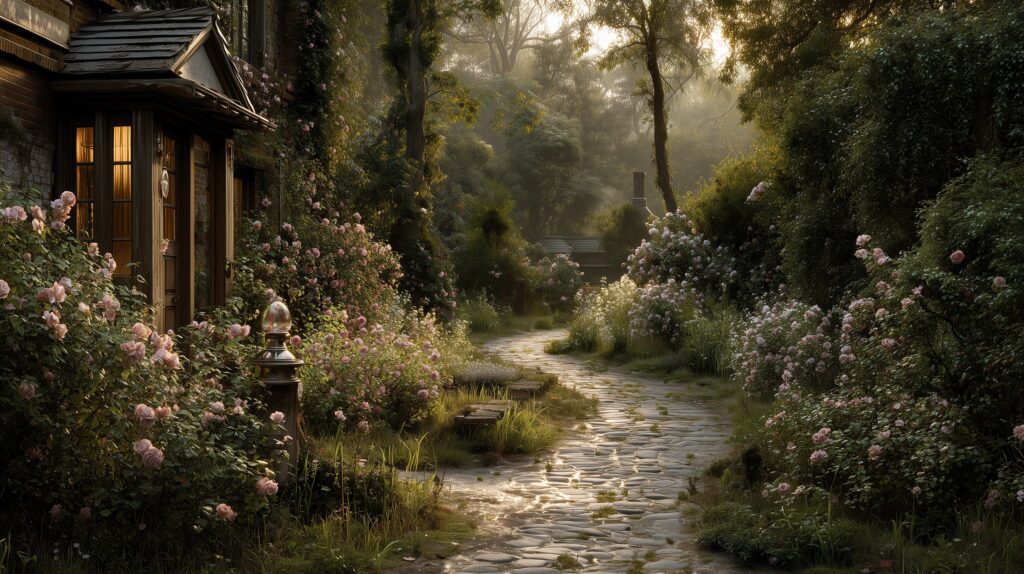
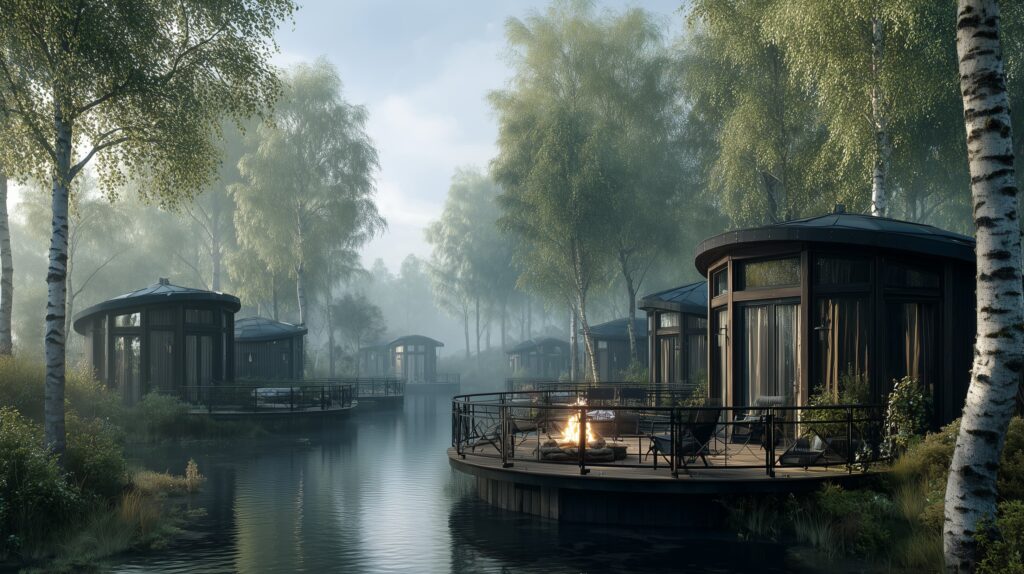
I want to mention the segment I put together using AI-generated images — what I was calling, loosely, the dream home sequence.
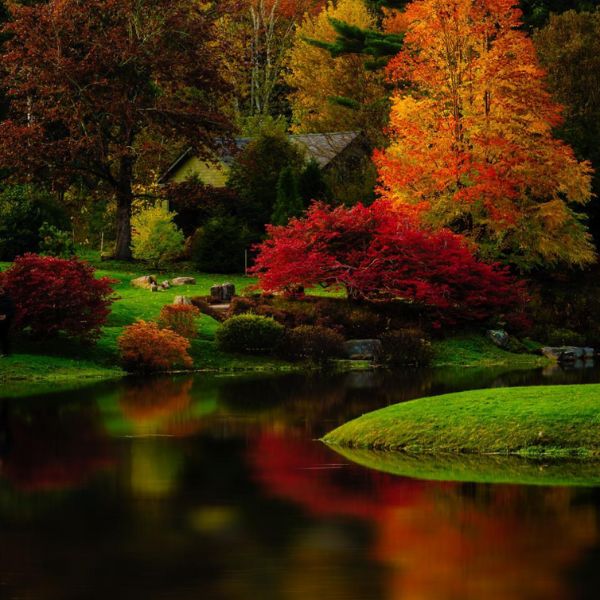
Somewhere on the drives through the Carolinas I’d been recording thoughts into a voice memo about what my ideal place to land might look like. Not a house exactly — more like a village. Something old-world in scale, built for creatives, four seasons with a real fall and a light winter without anything punishing. A small cottage with a sidewalk that goes past the pond to a little studio out back where I could work, paint, edit, photograph — whatever the day called for.
The investment version of the idea was a tiny home village. Individually designed units, a common space, the whole thing centered around connection and creativity. I had three design directions in mind: Scandinavian — dark timber, clean lines, community fire pit, something lifted from a Norwegian hillside. Mediterranean — whitewashed walls, terracotta, a long table. Appalachian — timber frames, stone, rocking chairs, everything around a lake. That last one is probably the most honest given where I keep finding myself wanting to be.
None of these images had any people in them. Quite the utopia.
It sounds like dreaming, and it is. But it’s the kind of dreaming that’s connected to something real — a year of looking at places and asking myself whether I could live there, and slowly developing an answer that has more shape than it did when I started.
What Comes Next
Here’s what I said to camera at the end of this episode, as clearly as I’ve said it anywhere:
50at60 is expanding, not ending. Chasing Light and Story is the next layer. The National Parks project is a venue for human stories, not just landscape. I started this year pointing the camera at myself. Now I’m learning to point it outward too. The two threads run together — my journey and the stories of others.
I bought the domain 63at63 at some point, which would be visiting all 63 national parks in my 63rd year. If you thought 50 states in one year was aggressive, that one is, as I said on camera, completely asinine. The goal with Chasing Light and Story is to travel slower. To actually sit with people. To interview them in places that matter to them and find out what their story is. The Kim Kahana documentary — an hour and a half on a 92-year-old stunt performer — is the only experience I have of telling someone else’s story. It was one of the best things I’ve ever made. I want more of that.
I’m also working on a video project for Denise — my ex-wife, one of my closest friends, someone I’ve traveled with, shared holidays with, and apparently am now going into creative production with. She’s launching something new and needs a short promotional piece for a Kickstarter campaign. I did some storyboarding, got excited about it, and realized it was the first time I’ve actively taken on telling someone else’s story since Kim Kahana. She told me she’s terrible on video. I told her: so am I. You record a hundred videos and delete a hundred videos and somewhere in there you find the one that’s worth keeping.
That applies to all of this, honestly. A hundred episodes in and I’m still figuring out how to talk to a camera like there’s somebody on the other side of it. I think I’m getting better. Maybe.
Eighteen states to go.