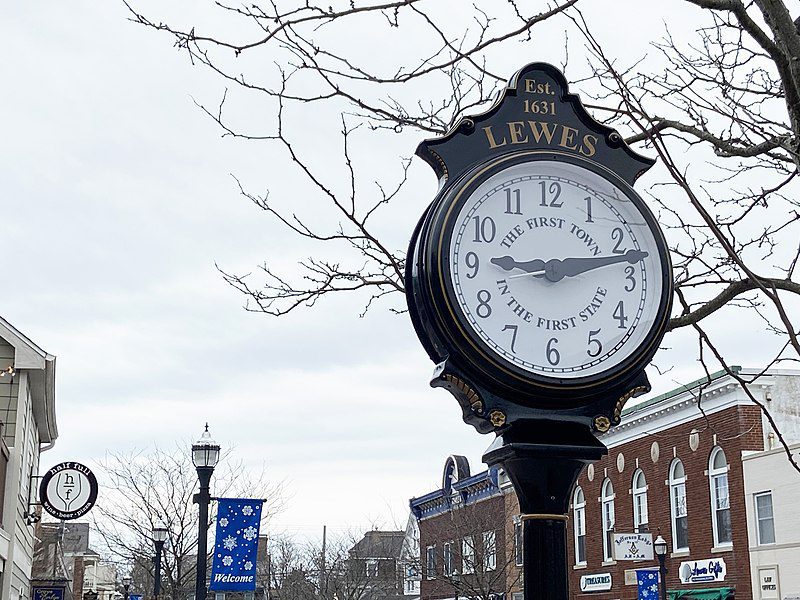
Lewes, Delaware
I’m going to leave this part in. I debated cutting it.
The morning of this episode I was sitting on the couch, cold mostly gone, and honestly not particularly in the mood for travel. It was nine days after the election. I had expected the trip to be a decompression, a way to step away from everything and just be somewhere. What I found instead was that the news follows you. Social media follows you. The thing you’re carrying doesn’t stay home when you leave.

I won’t get into specifics here. What I’ll say is that the country felt raw in a way that was hard to separate myself from, the divide was showing up in my own family, and standing in a cute off-season town in Delaware while all of that was humming in my pocket was a strange experience. I was happy with how the election went. I was not fully at peace with how unsettled everything still felt.
That’s where I was. I left it in because it’s honest.
The Historical Society and BJ
I almost didn’t go in.
I had walked the Lewes historical complex the day before from the outside — a cluster of 19th-century buildings maintained by the local historical society, a 19th-century doctor’s office with the original contraptions still in the cabinets, an old schoolroom with the kind of desk my brother and I used to play on in Pennsylvania. I had walked around without really engaging with any of it.
Then I went into the office and talked to the woman at the front desk. Her name was BJ. She used to be a history teacher and something of an actress, and she had opinions about this town and its past, and she shared them with the enthusiasm of someone who has been waiting for an interested audience.
Here is what I learned.
The large wooden contraption in the yard, the thing I’d been photographing without understanding what I was looking at, was used to dry fishing nets. Massive nets, made from natural fiber that would rot if left wet. Workers would walk around the machine as it turned, drying the nets out before they could be used again. The fish they were catching was a small oily species that’s inedible by human standards but exceptionally useful — rendered down for oil, used in fertilizer, ground up for chicken feed, incorporated into glue. The processing plant was enormous and operated for decades.
And it absolutely reeked.
BJ told me the story of the man who ran it, a local industrialist who got elected mayor multiple times despite — or perhaps because of — the fact that his fish processing operation made the entire town smell like low tide on a bad day. People at the beach would put on baby oil to tan and come home smelling like fish. You could smell the town from miles away driving in.
Her impression of the mayor, cigar firmly in place, was: Yep, it smells — but smells like money.
She explained that this industrial past, paradoxically, is part of why Lewis is so well preserved today. While neighboring towns were tearing down old buildings to put up split-levels for the men coming home from the war, Lewis held onto its historic fabric. A combination of economics, timing, and stubborn attachment to what was already there. The buildings stood. They’re still standing.
I should have gotten her on camera. Frank would have been right to call me on it. She was exactly the kind of person this project is supposed to be about — a drama teacher and history teacher who ended up running a general store that used to be a general store, full of antiques and tea and knowledge about why the town she lives in looks the way it does. That’s a story.
I didn’t record it. I have my description of it, which does not do it justice, and the memory of someone doing a cigar-chomping mayor impression in a 19th-century building in Delaware, which I will keep for a while.
The Rest of Lewes
The historical society has several buildings worth walking through if you’re in town. The 19th-century doctor’s office made me grateful to be sick in the 21st century. The old schoolroom had the kind of desk that would now be in a museum, which technically it was. BJ gave me a map and directions to the oldest house in town and a couple of other spots before I managed to get back out the door.
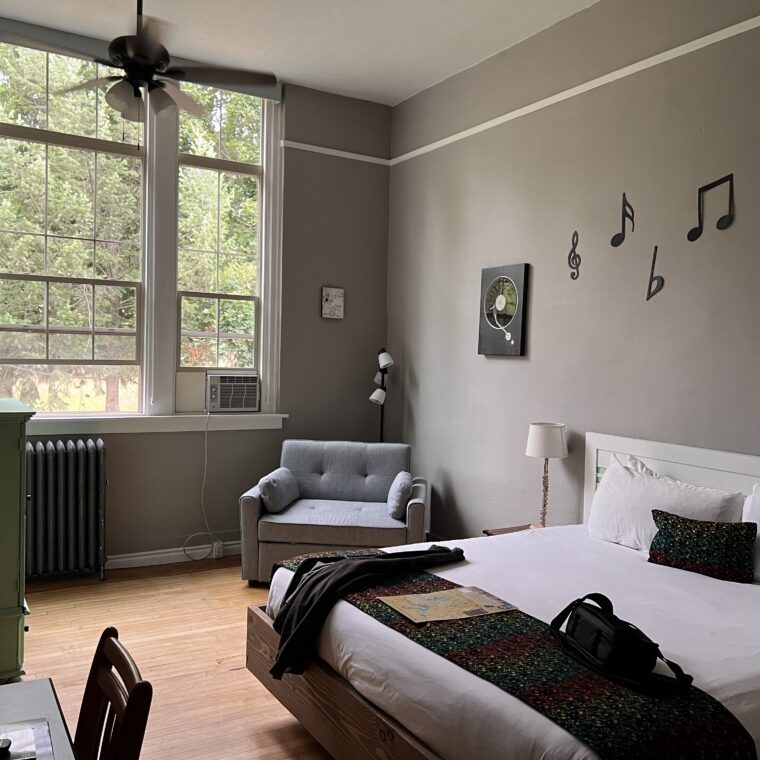
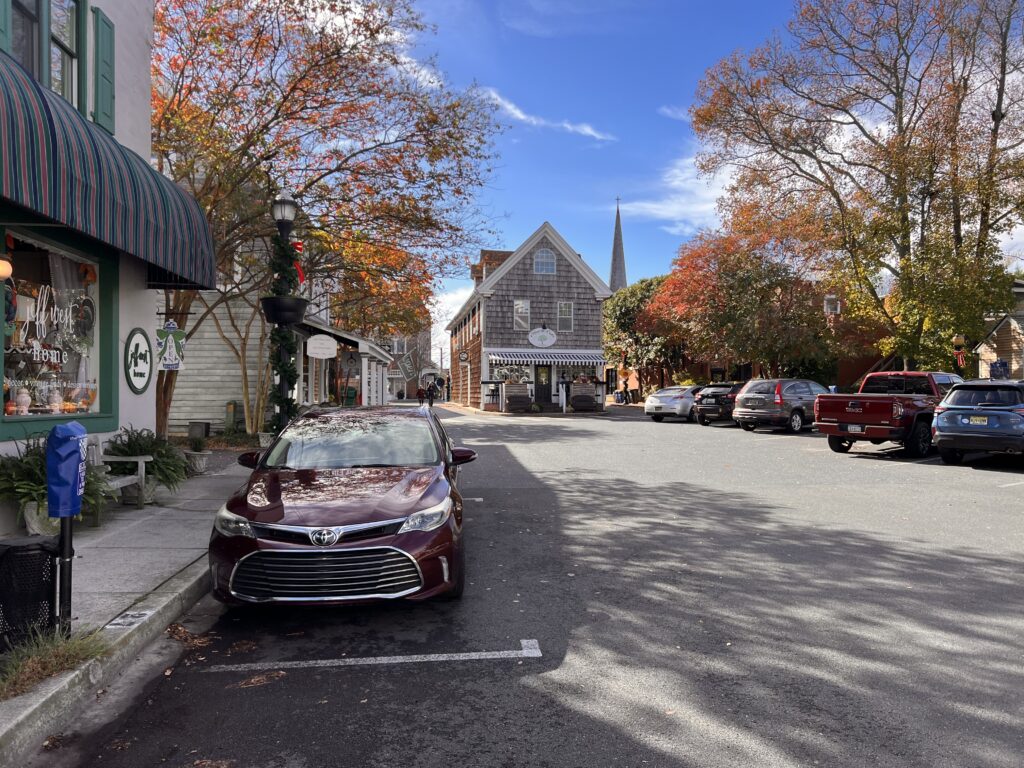
I went to the tavern building, which was my accommodation that night. Someone told me there was going to be singing later — old sailor’s songs of some kind, a particular tradition with a name I can’t remember. The fireplace was going. The town had Christmas lights up from the night before, still strung across the storefronts.
I walked it one more time before dark.
Rehoboth Beach next, or south Delaware, one more day. Penny was purring at home. Time to keep moving.