Episode 57 | Mystic, Connecticut
I came downtown for a croissant. I left with an interview, a second visit to the seaport, and a genuine reluctance to get back in the car.
Mystic does that. It doesn’t announce itself loudly. It just keeps offering you things to slow down for, and if you’re paying any attention at all, you take them.
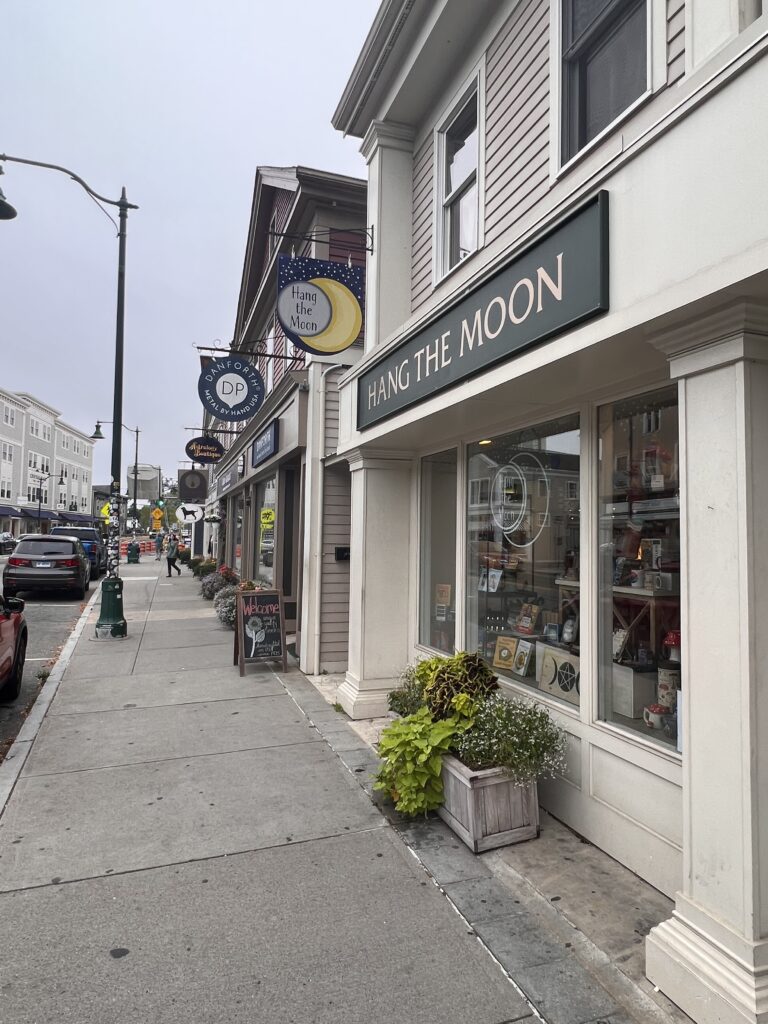
Stephanie and Hang the Moon
I was walking past the shops when a tagline in a window stopped me: Exceptional gifts for women by exceptional women. The store is called Hang the Moon, and the owner is Stephanie, who turned out to be exactly the kind of person I came to New England to meet.
She’s been in Mystic for twenty years, watched the restaurant scene transform the shoulder seasons from soft to genuinely busy, and built a shop around a very specific principle: everything in it has to be doing some good in the world. The leather bags and jewelry she carries come from a workshop outside Nashville that trains women in recovery. Another vendor’s leather goods come from Brazil, helping women transition out of the sex industry. Every item in the store has a story attached to it, and Stephanie knows all of them.
She could sell anything, she told me. She chooses not to. That’s the whole business model, and it’s working.
When I told her about the project she lit up and said she was excited for me. That kind of genuine enthusiasm from a stranger is something I’ve encountered more than I expected on this trip. People are interested in the idea of someone just going out and doing the thing. Maybe because most of us are waiting for the right time that never quite comes.
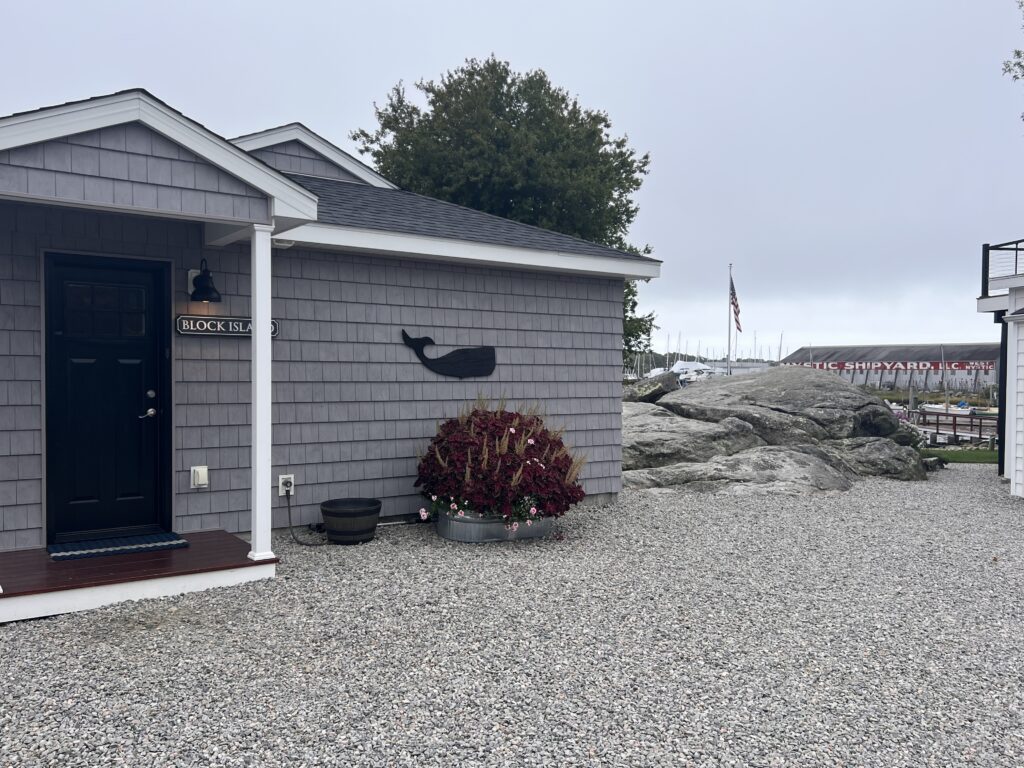
The Cottage, One Last Morning
Before heading out I stopped to talk to the owners of the property. They’d been running it for seven years, converting what used to be a private compound of sheds and outbuildings into a collection of individually designed waterside cottages. A little houseboat. A couple of small cabins. The main building. Each one styled to feel like it belongs to this specific corner of coastal Connecticut.
My sister-in-law Jess and I have talked about something like this, the idea of buying a property somewhere and developing it into small, distinctive stays that feel rooted in where they are rather than interchangeable with every other rental. These people did exactly that. I told them I’d send photos. I meant it.
If you’re heading to Mystic and thinking about where to stay, skip the chain hotel and find one of the cottages on the water. I’ll put the name below when I figure out where I wrote it down.
Back to the Seaport
I was supposed to drive to Newport. I turned left instead.
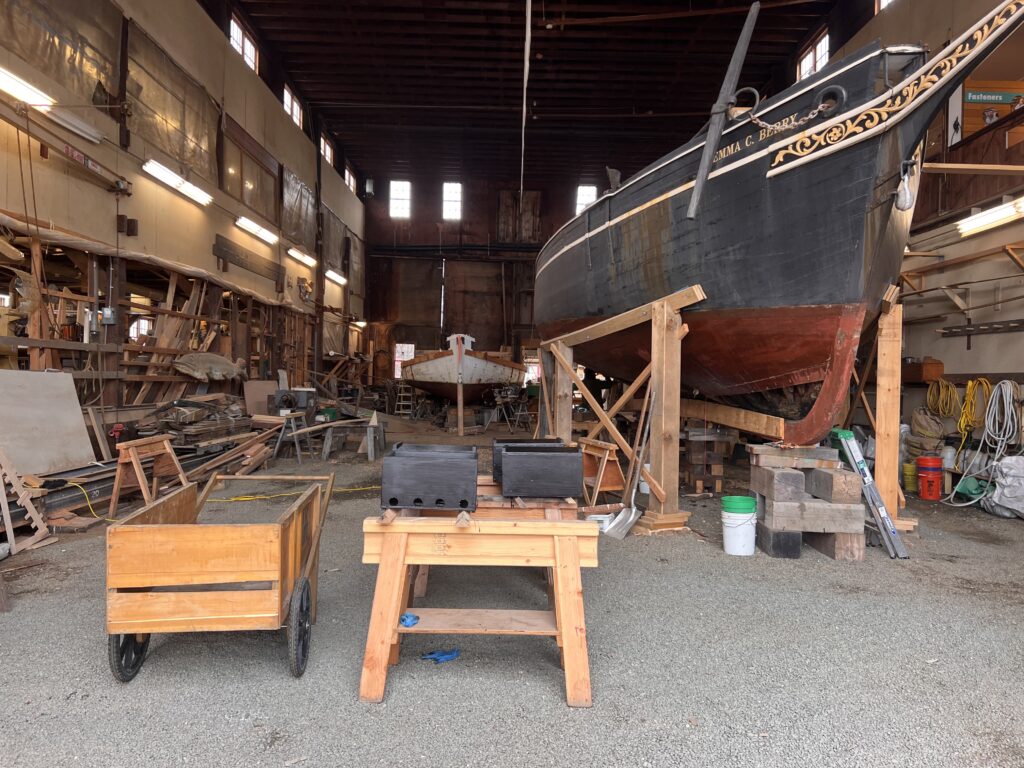
My ticket to the Mystic Seaport Museum was good for multiple days, and I had unfinished business with the LA Dunton, the 1921 fishing schooner being rebuilt in the working shipyard. The previous visit I’d spent forty-five minutes talking to one of the crew without ever getting the camera out. This time I was ready.
I didn’t get Chris, the shipwright I’d hoped to find, but I got Tammy, a volunteer with enough knowledge about the restoration to make the whole project come alive. The LA Dunton fished for cod and haddock until 1958, came to Mystic in 1963, and came out of the water in December of 2022 for a multi-million dollar restoration that will take roughly eight years to complete. Staff shipwrights and volunteers, working side by side, rebuilding the thing board by board using the same methods the original builders used in Essex, Massachusetts over a century ago.
I know virtually nothing about boat construction. I find this place completely fascinating anyway. There’s something about watching people do skilled work with their hands, work that takes years to learn and decades to master, that holds attention in a way that a display case never could. The museum had the good sense to build the shipyard into the exhibit and let people ask questions. That’s the right call.
It started raining. I kept walking.
What Mystic Holds
Mystic isn’t a loud town. It doesn’t need to be. The stories are in the creaky dock planks and the smell of salt and old wood, in a shop owner who vets every vendor for conscience, in a volunteer who can tell you the exact fishing grounds a 103-year-old schooner used to work.
You could spend two days here checking items off a list. Or you could stop for a croissant and let the morning take you somewhere more interesting.
Newport next. This time I’m actually going.