It rained all day. The weather app kept updating the estimated stop time — 8, then 9, then 10 — and by mid-morning I had accepted the situation and gone looking for somewhere to be indoors.
I woke up in Bethlehem, Pennsylvania. State twenty-nine. I was born in this state. I have family here. I have photographs — somewhere, somewhere in a box — of my niece’s graduation from Moravian University right here in this city, maybe fifteen or twenty years ago. I didn’t remember that until I was already in the parking lot, trying to remember why the main street looked familiar. Some places you’ve been before turn out to be places you passed through while you were thinking about something else.
The Steel Stacks
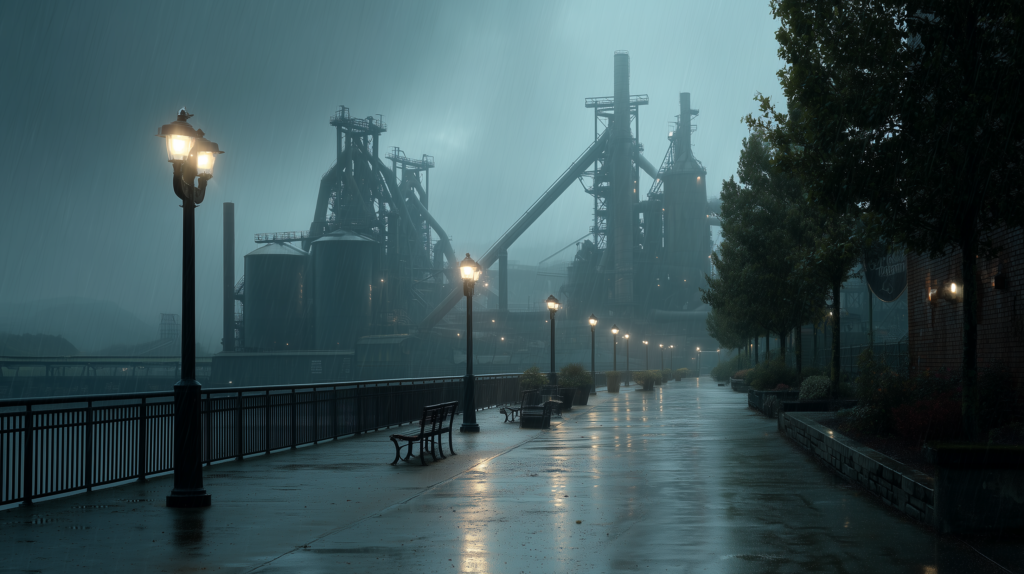
The first thing that stopped me was the steel stacks.
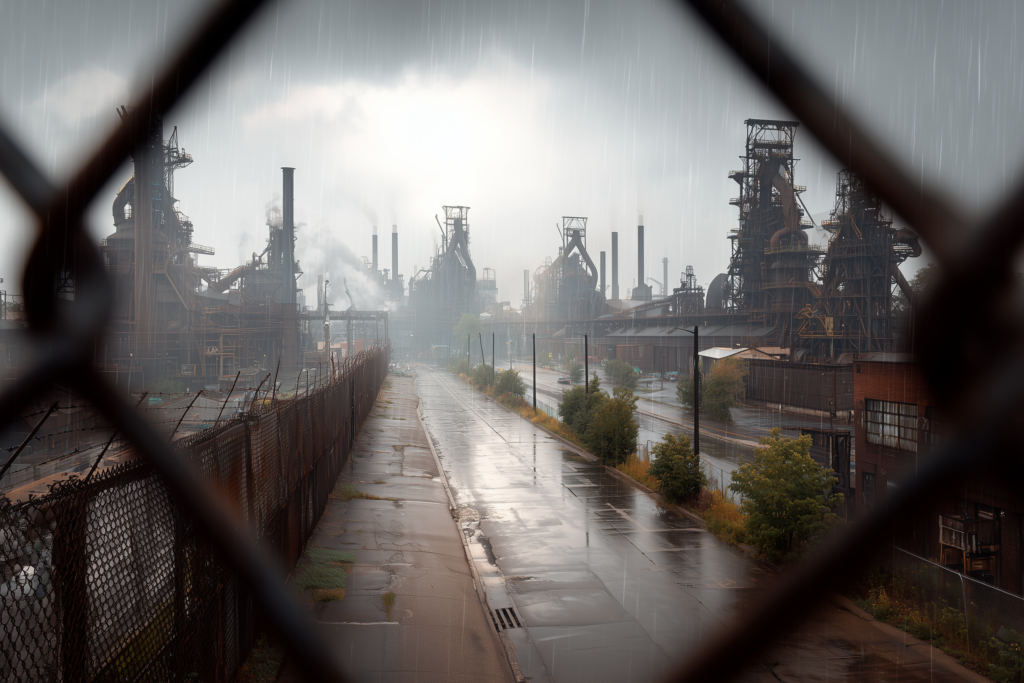
I was driving through the rain when they appeared on the horizon — enormous blast furnaces and industrial structures rising out of a low gray sky, surrounded by chain link fencing and security cameras and a silence that felt wrong for something that size. Bethlehem Steel. For most of the twentieth century it was one of the largest steel producers on earth. The steel that built the Golden Gate Bridge, the Empire State Building, the Hoover Dam, the ships that crossed the oceans in two world wars. It came from here, from these furnaces, from thousands of men working shifts in heat and noise.
The furnaces have been cold since 1995. The structure remains.
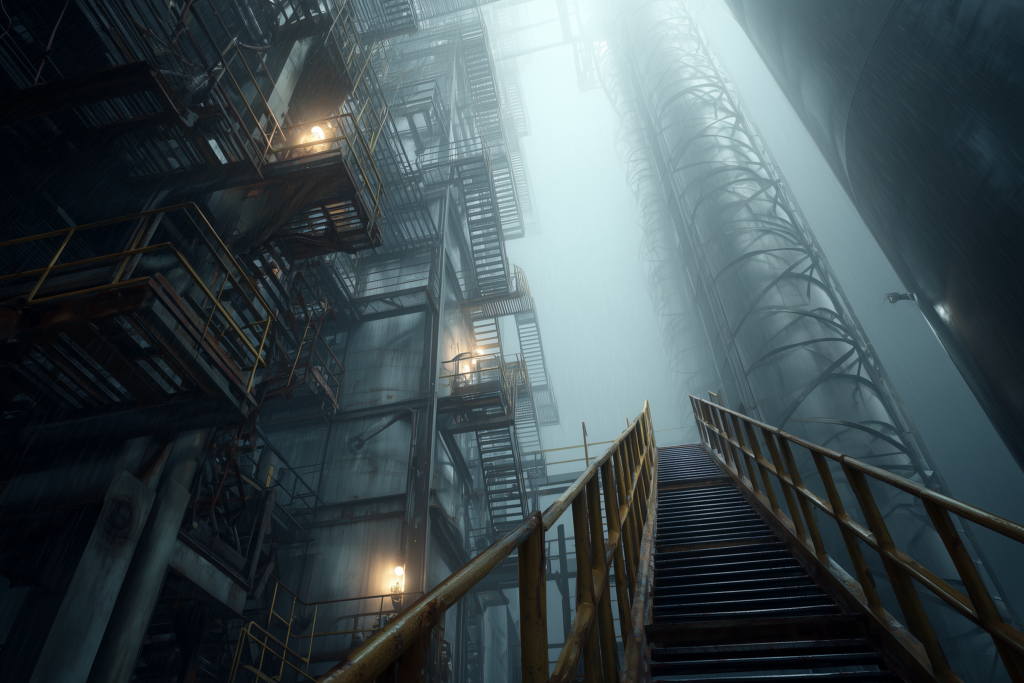
I parked and walked as close as the fencing allowed, which wasn’t very close. Tours were closed. The drone was out of the question with the security cameras everywhere. I stood in the rain looking up at catwalks and ladders and pipe systems that go fifty, sixty feet in the air, and I kept thinking about what it must have looked like in operation — tiny figures moving through the steam, crossing walkways, disappearing into the shadows. Like Oompa Loompas in a steel mill, except instead of chocolate they were forging the infrastructure of a country.
I say that in the video and I stand by it.
The Museum
A construction worker in the museum lobby apologized for blocking the pamphlet rack with his ladder and ended up being the most useful conversation I had all day. When I told him I was overwhelmed — I was genuinely overwhelmed, standing in the middle of all this history I’d driven past a hundred times without understanding — he told me about Don.
Don is eighty years old and does a walking tour of the site every Thursday. He worked in this mill for thirty years. Three decades of shifts, heat, noise, and purpose, and now he takes visitors through the whole operation and tells them what it was like from the inside.
I wasn’t there on a Thursday. I’ll be back for Don.
The museum itself is housed in the old facilities building and has the feel of a place that knows it’s sitting on something important and is trying to do it justice. Film clips, photographs, artifacts, the whole industrial arc from the company’s founding in 1857 through its collapse in the 1990s. The quote from Charles Schwab — the early Bethlehem Steel chairman, not the financial services company — played on a loop in one of the exhibit rooms: get so enthused over your day’s work that someone has to remind you to go out to lunch. I wrote it down.
The Thought That Stayed
Driving through this part of Pennsylvania in the rain, I kept coming back to something I was recording for myself and probably won’t use in full. When my family moved from Pennsylvania to Florida when I was fifteen, I resented it. Teenagers generally resent disruption. What I couldn’t have known then was what it would open up — the events industry in South Florida, forty years of work I couldn’t have found here, a career built around light and creativity that I’m not sure would have existed if I’d stayed in the rust belt watching the steel industry collapse.
I don’t say that to be harsh about Pennsylvania. I say it because standing in Bethlehem watching the bones of an industry that shaped this whole part of the country, I felt grateful in a specific way I hadn’t expected. The move I resented gave me something I couldn’t have predicted. That’s usually how the important things work.